NAMSTA: Caribbean Men’s Lives Matter?
- Namsta The Author

- Aug 17, 2020
- 8 min read
Updated: Jan 5
Black Men United (BMU). YOU WILL KNOW. What-a-tunnnnnne! I remember the ten-year-old version of me blasting this legendary song on repeat and singing (if you can call it that…) along to the uplifting lyrics. Who knew 26 years later, these words would still be so hauntingly relevant today?
One of the reasons I was inspired to create ‘The Urban Tales of Mz. Bumper Queen’ fiction series was due to the lack of diversity when it came to mainstream media’s representation of the UK inner city (aka U-R-B-A-N) culture. Let’s not pretend we don’t have hood-rats, roadmen and well, gangsters but this certainly doesn’t account for all of us.
One representation if not stereotype which still irks the bejesus out of me to this very day has got to be the Caribbean man. More specifically, the JAMAICAN man. Ok so stereotypes such as the ‘Yardie’ gangster were hardly plucked out of thin air. This I understand. However, painting every born and raised Jamaican man with the same womanising, drug dealing, multiple baby mother having, flashy bling-bling lifestyle living brush seems a bit unfair to me.

Yardie - The gritty, iconic bestseller was first published in 1992 and later adapted for the big screen by British Hollywood actor, Idris Elba in 2018.

In the spirit of today’s Black Lives Matter movement and to understand the origins of these stereotypes, we need take a step back to move forward. So, without further ado, let’s go back, way back, back into slavery times.
PLEASE NOTE: As a Black British person of West Indian heritage, I’m talking about slavery in relation to the Caribbean.
So, here’s my understanding……
It is said that slave owners would separate male slaves from their families and force them to impregnate other female slaves to produce good stock. In addition to this, the male slave was often emasculated via beatings from their slave masters in front of their families as well as other slaves and at times, sodomised in their presence.
Fast forward to the 21st century and it’s no surprise the terms ‘baby mother’ and ‘baby father’ are globally synonymous with Caribbean culture. The image of the single (usually Black) mother is left holding the baby and because of the father’s absence, becomes the matriarch of her family. In terms of popular stereotypes, this single mother is living in council housing, claiming state benefits while the child’s father is nowhere to be seen or is living elsewhere with one of his other children’s mothers.

MUST READ: A refreshingly candid and brilliantly observed look at life as a Black mother…Check it out if you haven’t done so already!
Rastafarianism as we know, is another key part of Caribbean culture whereas the men are likely to have children with numerous women (think the late, great Bob Marley #RIP). If it wasn’t for shows such as the popular 90s sitcom, ‘Desmond's’, mainstream media might be inclined to think the nuclear family within Caribbean culture is all but extinct.

Learning of the recent Ahmaud Aubry and George Floyd killings in America is a reminder that raising a Black man irrespective of his cultural heritage in today’s western society is not without its anxieties. Reinforcing positive role models for our Black boys to look up to has never been more important.
The UK’s first magazine, Cocoa Boy which is targeted at Black boys is a step in the right direction. This pioneering publication is hot on the heels of the recently launched Cocoa Girl magazine which is produced by Founder and Director, Serlina Boyd.
Swap the road life for army life?

If you live in the UK, you’ll be all too familiar with the explosion of gun and knife crimes happening across our cities with no signs of slowing down. It is claimed that much of these crimes are gang related. Many of the perpetrators and victims are not only boys and young men, they are also Black. With contributing factors such as absent fathers, poverty, exclusion from the school system but to name a few, it’s hardly surprising when the young men in question turn to the gangs and ‘road life’.
Back in 2017, renowned reggae record shop owner and music producer Blacker Dread took part in a documentary called ‘Being Blacker’. This documentary gave a behind-the-scenes look at the events taking place in Blacker Dread’s life at that time, including sending his youngest son to Jamaica for schooling after being excluded from school in the UK.

While sobering films such as Blue Story and dramas like Top Boy depict the reality of those involved in gang life, last year’s statistics showed that more than half of the young people in juvenile detention centres were of a Black, Asian and Minority Ethnic background (BAME).
When discussing the rise in gun and knife crime with my peers and elders, a response I’ve heard on more than one occasion is “send these yutes to the army!”. After all if the official figures are to be believed, gang activity usually results in a toss up between a lengthy prison sentence or being killed. Besides, if the education system and society in general are failing these young men, why not point them in the direction of an institution where they could reach their full potential?
Dependent on your views about the British Armed Forces, the chance to acquire life skills such as discipline, teamwork, build brotherhood type relationships while learning a new trade on the job, not to mention the possibility of global travel might be worth some consideration.
According to recent statistics, BAME personnel make up just over 8% of the total Armed Forces. Statistics also show that personnel from BAME backgrounds are more likely to complain about bullying harassment and discrimination. Cases of discrimination account for 25% of all the complaints made across the Armed Forces. These figures might be one of the reasons as to why recruitment from British BAME communities into the Armed Forces isn’t higher.
What happens when serving in the army is one of the few options you’ve got to escape to your tough surroundings for a chance at a better standard of living for yourself and loved ones?
As you’ve probably gathered by now, nothing inspires me more than meeting folk from different walks of life and hearing their back stories. Having encountered a couple of young army personnel (who for the purpose of this post I will refer to as ‘person A’ and ‘person B’) in recent years, their intriguing journeys are no exception.
Person A
Person A is originally from a Central American country which is culturally Caribbean. Gang violence in person A’s community left him fighting for his life but when he pulled through, he went on to serve in the British Armed Forces. By all accounts, person A’s long-standing army career has ensured his loved ones back home can live better while he is carving out a life for himself in the UK.
Person B
Person B is from a Caribbean island and left school at a young age so he could help his mother in financially supporting their family. After seeing some recruitment details about joining the Royal Marines at his local Scout club, person B signed up. Since leaving the Royal Marines after a decade's service, person B has a successful career in engineering and is a homeowner in the UK.
While I could never walk a mile in either person A or person B’s shoes, I can’t help but salute them for their bravery. Having to protect and serve by any means necessary which I imagine, might include doing and experiencing things some of us civilians could not even begin to comprehend.
Bearing in that mind, some might argue that those from Commonwealth countries who are given the opportunity to serve Queen and Country via the Armed Forces, are far more inclined to do so than their British born and raised Caribbean counterparts.
Any exceptions to the ‘typical Caribbean man’ stereotype?
Ooooh how I just clutch my invisible pearls when I recount THAT 2011 trip to Jamaica…Which was documented in my ‘City Gurl in a Rural World’ blog series. To say the experience was eye-opening is putting it mildly. However, thanks to Skunk (if you read the blog series, you’ll know exactly who he is), I certainly had front row seats to the life of a Jamaican man. All of which has come in handy while working on my King Chinn book project. Skunk was ‘stereotypically’ Jamaican in so many ways but hey, given his harsh circumstances you couldn’t blame his hustle. After all, as that wicked ‘Out of Di Slum’ tune by dancehall artist, Tamarley goes…. Desperation makes gunshots blow for it!
Konshens

As part of the research for my 2009 ‘For the Love of Raving’ report, I asked international dancehall star, Konshens about his thoughts on the urban raving scene. As quoted by Konshens at the time, he agreed that promoting his material via this scene was important for him as an artist.
Over a decade later, it is great to see that Konshens’ work ethic, personal brand building skills and sharp business acumen has paid off for him. Konshens’ entrepreneurial ventures have not only enabled him to become a self-made millionaire over the years, but his success makes him a positive role model for his Jamaican peers, especially artists who hail from a similar background to himself.
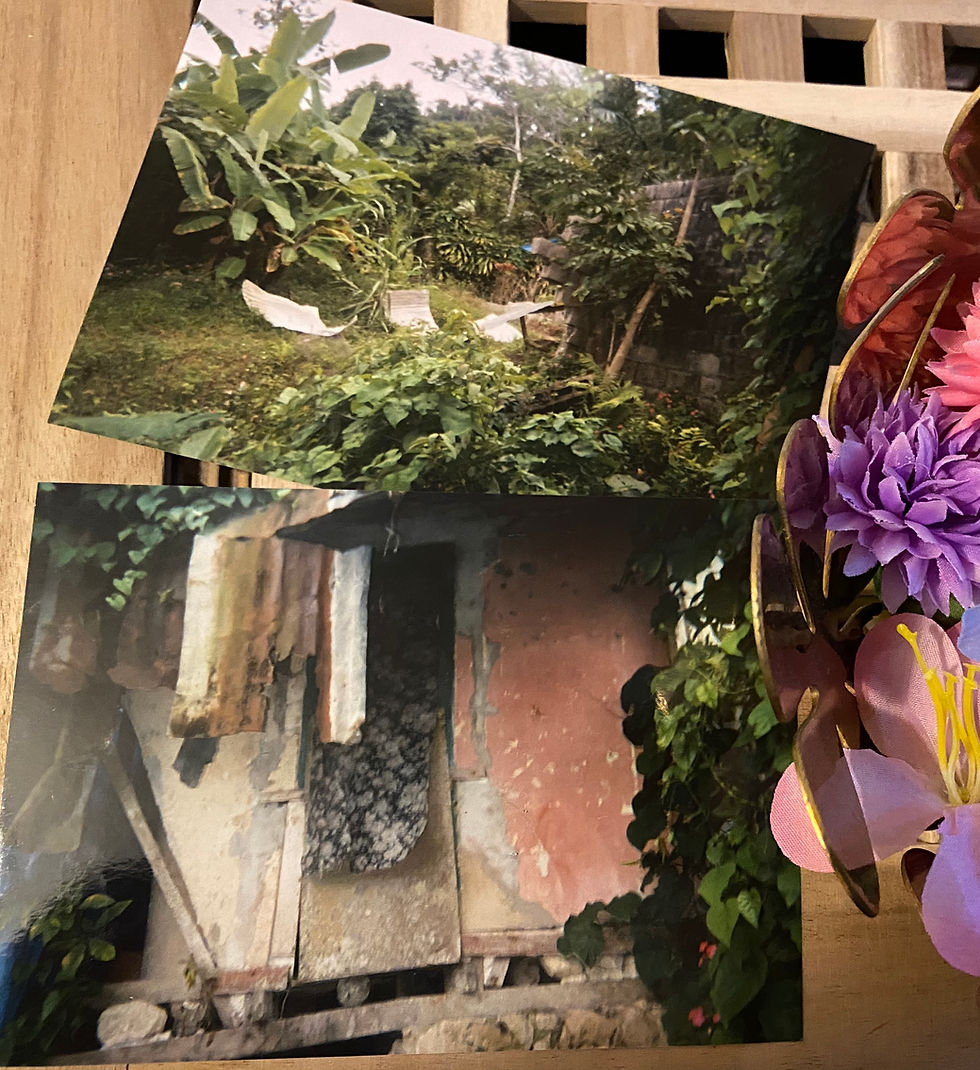
As a British person of dual Caribbean heritage, visiting the house where my Dad grew up in Jamaica humbled me beyond belief. Born in Kingston and raised in St. Ann, my Dad spent his childhood in this hilltop community until my grandparents sent for him to live in England. As per the photos (taken during my visit in 2005), the house my Dad grew up in was small and home to nine other people. Despite my Dad’s humble start in life, this hasn’t stopped him achieving all he has today.
While mainstream media may have other ideas about the representation of the Caribbean man (both born and raised as well as British born), it’s with great pride I can safely vouch for the fact I have male family members who don’t fit the popular stereotypes by a long shot.
This includes (but is not limited to):
· A property investor who started building his portfolio in his late teens and as result of this and his hard graft, has taken early retirement
· An owner of a popular retail franchise
· Head of Marketing for a top Government organisation
Who is King Chinn?

Ok, so I don’t want to give too much away about this member of Jamrock royalty just yet, but let’s just say he’s looking forward to making your acquaintance *wink wink*
For anyone who has followed the King Chinn book project will know it has taken me nearly a decade to complete it. I won’t lie, this has been my biggest challenge to date because writing King Chinn's debut tale is waaaaaaaaaaaaaaay outside of my comfort zone. The other four stories from the #MzBQ fiction series were far easier to write as they were told from the female perspective, even if each title involved extensive research for characterisation purposes.

You’ll be pleased to know I FINALLY completed the first draft of the King Chinn story during a solo-dolo trip to Mexico in 2018. Not only do I have my dear friend, mentor and fellow author, Anton Marks to thank for holding me accountable to finishing the draft, I’m so very grateful to the ‘man dem’ aka my home boys (Jamaican or otherwise) for helping me out with the research when I needed it.
Here’s to hoping I do King Chinn justice….*prayer hands and fingers crossed emojis*
Stay blessed and stay safe!

Fair use disclaimer: All images and videos used in this post are copyright of their respective owners and/or companies.


Comments